Introduction
An important aspect of industrial plants, commercial buildings, warehouses, hospitals, and residential buildings is fire safety. A good fire protection system can help to save lives, property and successfully conduct business in case of an emergency. The key element of many water-based fire protection systems is fire pump, which provides necessary water pressure and flow in case the water supply is not able to meet system requirements.
Being able to find a trusted fire pump supplier is an important stage of making functioning fire protection system. Such a supplier can help find proper fire pumps and clarify technical specifications, as well as provide necessary equipment for the project.
In this guide, Mechanism Trade describes types of fire pumps, factors affecting choice of suppliers, necessary safety standards, and practical tips about maintenance. Whether you are interested in new implementation of the fire protection system or its upgrade, the information provided here will help you make the right choice.
What Is a Fire Pump and Why Is It Important?
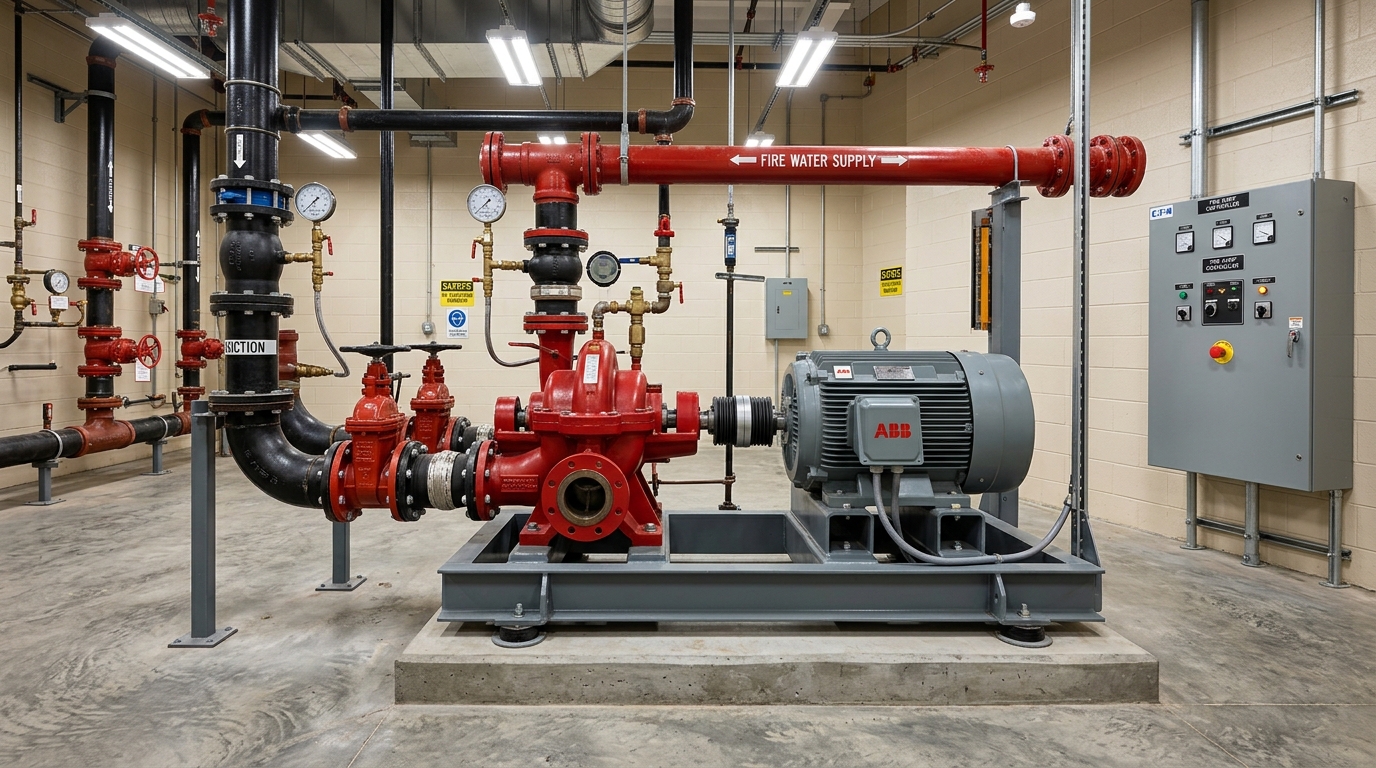
Fire pumps are mechanical devices that increase the water pressure needed and supplied by firefighting systems. They are used in fire protection applications such as sprinkler or standpipe systems.
When the existing supply of water does not have sufficient flow or pressure, a properly selected fire pump supplier can help fulfill the hydraulic demand of the system.
The National Fire Protection Association (NFPA) states that amendments to NFPA 20 outline the procedures for choosing and installation of the motors used for fire fighting.
The responsible supplier of fire safety equipment can bring to the attention of the project team certain equipment linked to the system design. Nevertheless, the final choice must rely on calculations and descriptions of the system prepared by certified professionals.
Different Types of Fire Pumps
There are different kinds of fire pumps used based on many factors like the type of water used, pressure, flow rate, installation space, etc.
1. Horizontal Split-Case Fire Pumps
Horizontal split-case fire pumps are popular types among the fire safety systems used in the commercial and industrial buildings because of an effective design that makes maintenance easier due to ease in access to the internal elements.
Horizontal split-case pumps must be used when large quantity of water is required.
2. Vertical Turbine Fire Pumps
Vertical turbine pumps are specific devices used when extraction of water is required when the water is located at a lower level than the pump, such as taking water from a storage tank or a well.
This arrangement can also come in mind when no other pump can be used due to suction conditions.
3. End-Suction Fire Pumps
End-suction pumps are another type of the fire pumps that are installed when there is no space for putting a pump.
4. Vertical In-Line Fire Pumps
There are limited type of pumps called vertical in-line that have the plug mounted vertically above the pump.
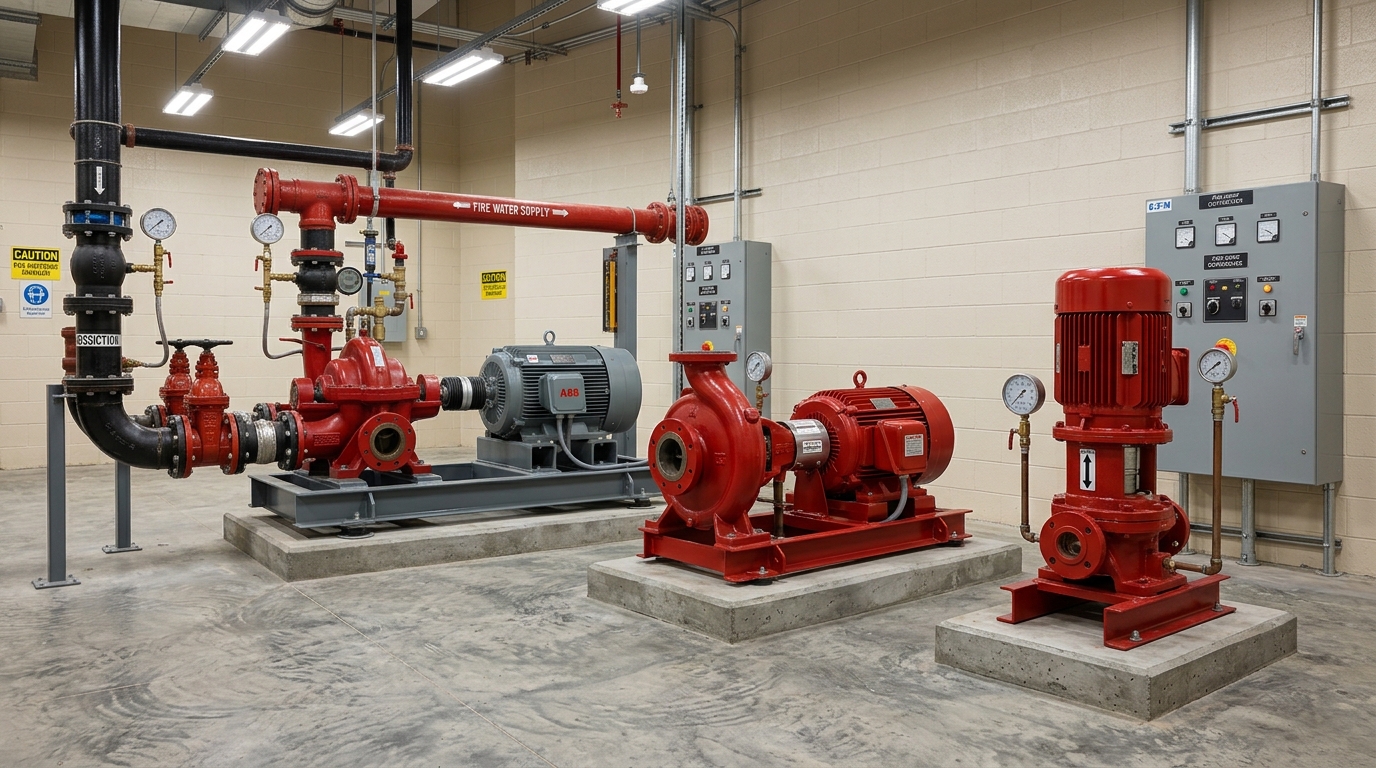
Comparison of Common Fire Pump Types
| Fire pump type | Key characteristic | Typical consideration |
| Horizontal split-case | Accessible internal components | High-flow applications |
| Vertical turbine | Suitable for certain below-pump water sources | Suction and water-source conditions |
| End-suction | Compact configuration | Space and capacity requirements |
| Vertical in-line | Small installation footprint | Equipment access and maintenance |
The table provides general guidance rather than a substitute for engineering calculations. A qualified fire pump supplier should be able to provide relevant technical documentation for the equipment being considered.
How to Choose the Right Fire Pump Supplier
Choosing a supplier means much more than just looking at cost. Fire fighting equipment must fulfil a number of performance concerns, so the quality of the supplier’s servicing policies is important for the success of the project.
1. Review Product Specifications
Check the rated capacity of the unit, its pressure and performance curve, the suitable driver and compatibility with other equipment. Ensure that the equipment provided corresponds to both project requirements and local norms.
2. Check for Standards and Certifications
Request the supplier to provide papers, which will confirm that the product has been tested and approved. In case there are performance requirements or standards defined for the project, ensure that the pump and the whole assembly meet compliance obligations.
NFPA 20 regulations should be treated as a reference point for the installation of this type of equipment.
3. Assess Technical Support
A reliable supplier must provide proper documentation, detailed info on the product and technical specifications. Before buying the equipment, clarify if installation services, commissioning, supply of the spare parts and after-sales services are included.
4. Comparison of Total Cost of Ownership
The lowest price does not always equal the best value. Consider quality of equipment, installation requirements, maintenance, availability of spare parts, and anticipated operational costs.
A good fire pump supplier should guide you through appraising the specifications of your requirements rather than just selling equipment based on its price.
5. Check Delivery and Warranty Terms
Find out how long delivery will take, warranty coverage, availability of the product, and how to secure spare parts. This information is important in cases when the project has a strict installation plan.
Important Factors Before Purchasing a Fire Pump
Before choosing any equipment, owners of projects and contractors must clearly define the actual needs of the system.
The following aspects should be taken into account:
- Required flow: Rate of water the fire protection system should be able to pump out.
- Required pressure: Find out how much pressure needs to be produced to operate under the worst conditions of use.
- Water supply: Determine possibilities that exist in the form of the source, suction conditions, and amount of water that may be stored.
- Power supply: Define whether an electric engine or a diesel engine will be used.
- Installation environment: Check the following conditions: the amount of available space, ventilation, access, and environment.
- Compliance: Make sure that requirements of the relevant codes are met.
- Maintenance access: Make sure that there is no problem with inspecting and servicing the equipment.
Following the proper suggestions will help eliminate problems of mismatches between the pump that has been chosen and a fire protection system, as the pump must not be selected according to its horsepower and price, but according to flow and pressure.
Understanding Fire Pump Standards and Safety Requirements
The selection and installation of fire protection equipment are subject to guidelines applicable to the particular project.
NFPA is responsible for the publication of NFPA 20, the Standard for Installation of Stationary Pumps for Fire Protection. NFPA 20 provides requirements on installation of stationary pumps for fire protection in the 2025 edition.
In addition to that, the US Fire Administration provides educational material on how sprinklers assist in minimizing fire casualties and property losses.
When choosing a fire pump supplier, It is advised to use the above-mentioned materials and verify which regulations and compliances apply in your area before taking any decision.
Fire Pump Maintenance: What Should You Know?
Regular checks, tests, and maintenance of fall protection systems are necessary to ensure the readiness of equipment for use.
A maintenance program needs to follow the manufacturer’s guidance and the rules applicable to the system in use.
Important questions to take into account when dealing with maintenance include:
- The examination of the pump, the engine, the controller, and associated elements.
- The detection of any leaks, corrosion, unusual vibrations, and damages that can be seen
- The verification of the water supply and the valves in situ.
- The performance of regular tests of operation and performance.
- The documentation of inspections, as well as the results of tests performed, repairs made, and faults found.
NFPA 25 is an essential reference used in regulating the inspection, testing, and maintenance of water-based fire protection systems. Professionals in the field will help you select the edition and regulation that needs to be used.
A good fire pump supplier would also help you with the product documentation, acquisition of spare parts, and provision of maintenance-related assistance.
Frequently Asked Questions (FAQs)
What does a fire pump supplier provide?
A fire pump supplier typically provides fire pump equipment and related technical information. Depending on the business, services may also include accessories, documentation, installation support, commissioning assistance, and spare parts.
Which type of fire pump is best for industrial buildings?
There is no single best option for every industrial building. The appropriate pump depends on required water flow, pressure, water-source conditions, installation space, and the system’s design. A qualified fire protection engineer should determine the required specifications.
How do I know whether a fire pump meets safety standards?
Request the manufacturer’s technical data, performance curve, applicable certification documents, and evidence of required product approvals. Verify these documents against the project’s specifications and local regulations.
How often should fire pumps be tested?
Testing frequency depends on applicable standards, local regulations, equipment instructions, and the installed system. Follow the governing inspection, testing, and maintenance requirements rather than relying on a universal schedule.
Why is after-sales support important when choosing a fire pump supplier?
After-sales support can help with spare parts, troubleshooting, technical documentation, and maintenance coordination. These services can be important for keeping a fire protection system reliable throughout its service life.
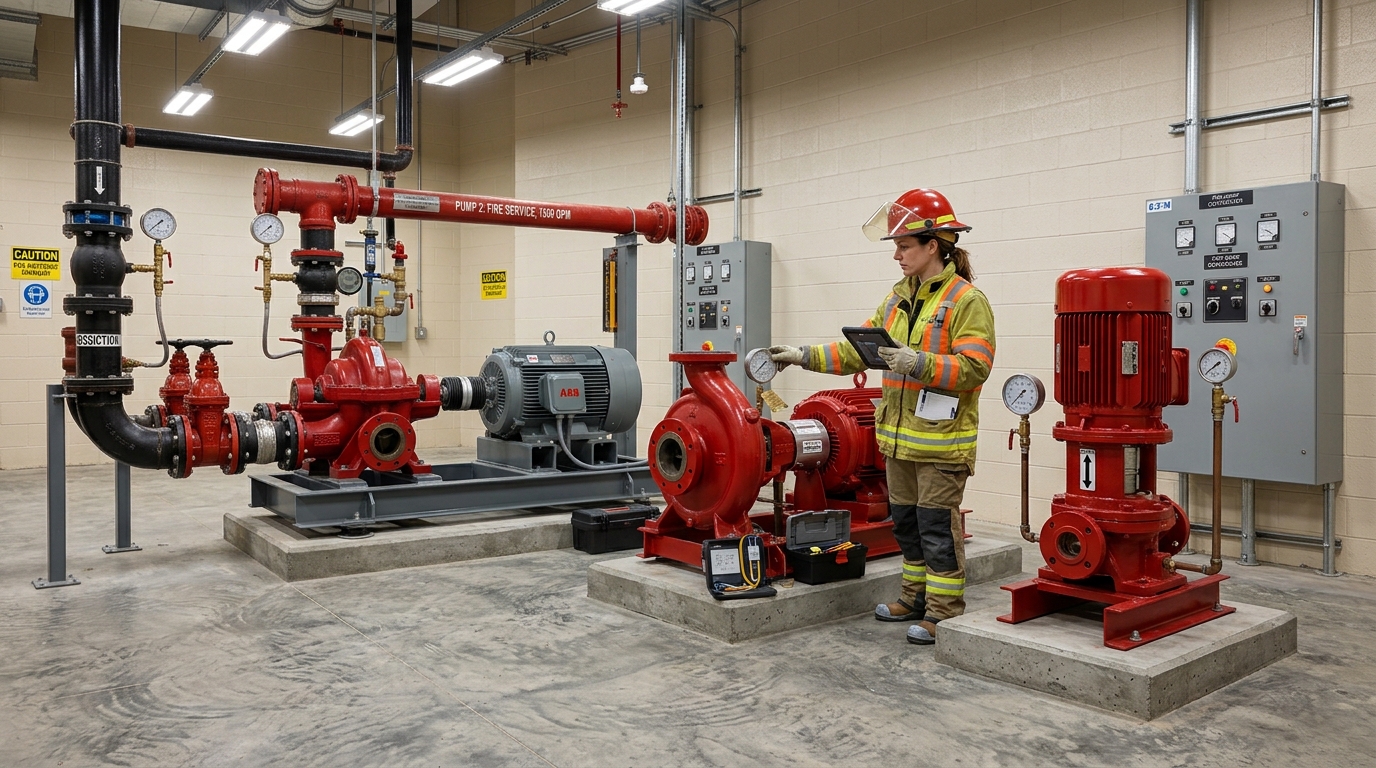
Why Consider Mechanism Trade for Your Fire Pump Requirements?
Selecting the right fire fighting apparatus involves paying attention to the equipment’s specifications and documentation, as well as requirements specified in the project.
Mechanism Trading can be considered a source of information for the customers who are interested in fire-fighting equipment and relevant industrial products. Buyers have to check the availability and specifications of the products, certification, warranty, and related support services prior to making any purchasing decision.
If you are carrying out a new installation or evaluating the existing fire protection system, prepare your project specifications before you ask for a quotation in order to enable suppliers to provide information on the best-suited solutions.
Conclusion: Choosing a Reliable Fire Pump Supplier
The fire pump should always be among the most important elements of water-based fire protection systems. While choosing the right water supply equipment, proper flow and pressure conditions have to be established; the kind of fire pump and its matching to current regulations should also be considered.
Choosing a fire pump supplier needs to go far beyond simply comparing prices. The documentation for the selected fire pump, its technical characteristics and availability of support services need to be considered.
Mechanism Trade encourages project owners, contractors, and managers to evaluate their fire protection objectives prior to making a choice.